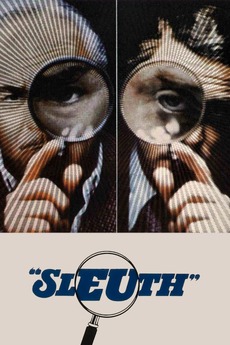
Sleuth

In isolation, Sleuth is a pretty good time. You get to see Michael Caine and Laurence Olivier overact their absolute faces off, and you can tell that they have a lot of fun in doing so. The setup of the film is aggressively faithful to the play from which it's adapted: two actors in total ever appear on screen, we stay within a single set (albeit a fairly large one), and there are three clear and obvious act breaks. This is not great cinema, but it is a pretty fun time, and you can tell that all the postmodern whodunnits like Knives Out sit in lineage and in conversation with this film. I'm glad to have watched it, even if — having seen what comes after it over the past fifty years — I found most of the twists and turns fairly predictable.
There is one exception to this, of course, and it's the way I found myself to the film: 1982's Deathtrap, also starring Michael Caine as one of the two leads. It too is an adaptation of a play and, well, very, very similar to this film. I'm going to go into spoiler territory a little bit here: Deathtrap came ten years after Sleuth and was chided for being somewhat derivative of the film, a charge that now makes a whole amount of sense. That being said, I was legitimately shocked at the initial twist in Deathtrap — it caught me completely off guard, having gone into the film blind. Whether it's Michael Caine's now ubiquitous drawl or his inability to pull off a Cockney accent, I saw through the twists and turns of this one with much more facility.
Deathtrap did not much feint at trying to be a serious film with serious messages. This film has a pretty meaningful undercurrent of class warfare, and the slow turn from "ha ha, look at them jest and spar and go closer and closer to the edge" to "oh no, they've actually broken" was fairly gripping. But I think this film, even if it laid the groundwork, does not do anything quite as masterful as Christopher Reeve's performance in its spiritual successor. If you have to choose between one of the two, I'd still go with Deathtrap for that reason alone. But if you like that film — or say Game Night, which in reflection is both a criminally underrated movie and also one very deeply in this lineage — you should still check this out.
Having read a great essay on this movie and its American remake by Branaugh, two other notes come to mind:
- Olivier's Wyke is a great character with just enough eccentricity about him. In most of these metafictions involving a crime writer, they can end up one-dimensional — think Plummer's character in Knives Out. This film succeeds on the strength of Olivier confusing not just Caine but the audience as to what is real and what is madcap.
- The ending — does it work? Certainly it could not end any other way; there is something chilling about the final shots and sounds of the cacophony of animatronics. But it feels inevitable rather than shocking, and I ultimately don't care about either of the two leads' lives enough to feel any sense of deep sorrow or doom.