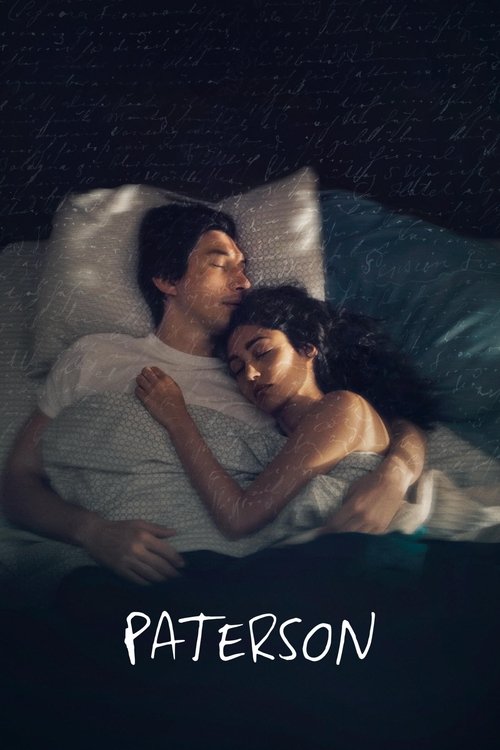
Paterson
Paterson is a film about art being a sinew in our life. Paterson has three distinct selves that we witness in the film — husband, laborer, regular at the bar — and he is satisfied with all three of these. But they live almost entirely in isolation of one another. The only connective tissue is his art. And while we have no reason to believe Paterson is anything more than an honest person, it seems fair to say that his most honest self is the one we see in the basement, late at night, nose buried in his notebook.
We are given glimpses of Paterson in other and prior contexts. Lingering shots of him in a Navy uniform. Hypothetical mirages of him as a published and celebrated poet on the horizon. But the film, like its titular character, is focused on the present and on what propels us through days that are monotonous and noble. It's beautiful because its clarity in that intent never detracts from its depth and from its conviction that art is both a thing that you put yourself into and a place to which you go.
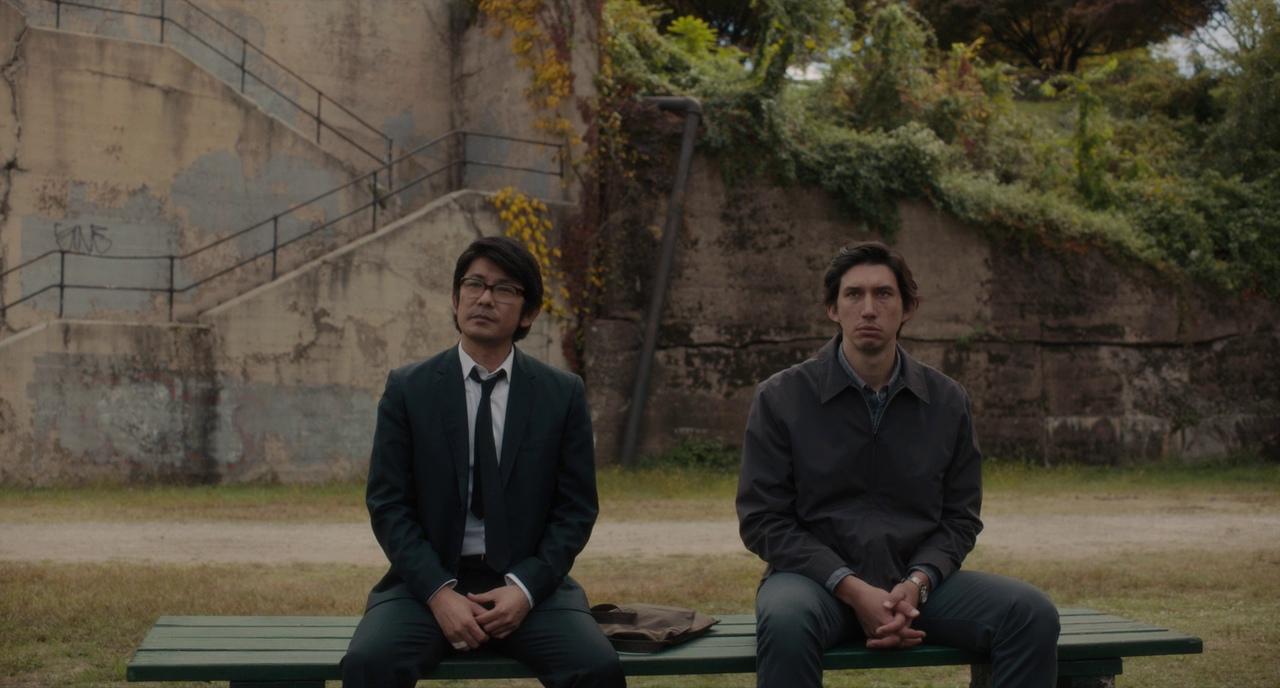
The ending of this film is what transforms it from a meditation on life and art in a very William Carlos Williams style into something slightly brighter. In one of the few scenes that you can describe as colorful, Paterson meets a Japanese tourist reading poetry. The entire rest of the film has a banality to it that contrasts with the magical realism here — the divine tourist arriving to talk to Paterson about his world and to give him a new notebook with which to fill.
I think you could argue that a different and not entirely worse version of this film would have not included the flight of fancy here, and ended things in much the same way they began. But I will be thinking about this scene: a tourist walking away from Paterson, and Paterson then slowly walking home, composing the first poem to put in his new book (and new books are sacred things). And I will be holding that scene as close to my heart as I do the final scene of the Uncle Vanya production in Drive My Car. Because art is what it gives us. And art is what we need.
You can tell I loved this film too much to be coherent about it, can't you? One last thing — I am not sure if there's a more beautiful depiction of true love than the scene in this film in which Laura asks Paterson if the poem about their matchbook mentions the little megaphone shape the letters make.