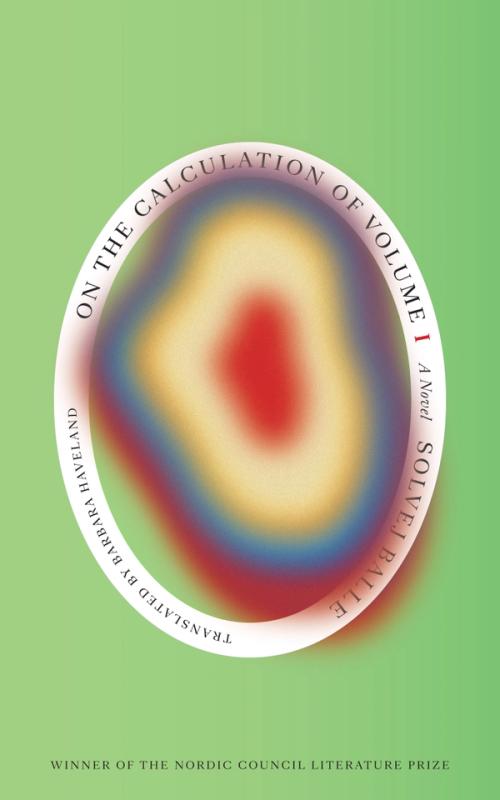
On the Calculation of Volume (Book I)
I was ready to wash my hands of this book very early on. I've seen enough vaguely auteurist time loop art like Palm Springs or Russian Doll to consider myself sated with the concept, and no amount of Long Live the Post Horn-esque Scandinavian quietude I thought could rescue a conceit that I was tired of as soon as I understood the game. But that is not what this book is about.
From here on out, I will talk in terms of spoilers.
The crux of the book is simple at a textual level. If you got stuck in a time loop, you would probably go insane. What I found so striking about this fairly banal observation is that the author resists easy outs. There is no third act in which the whole thing starts to get solved, nor is there a narratively convenient progression from discomfiture to hedonism to malaise to revelation. The protagonist in epistolary form shows us how she's experienced all of these things at once and that you do not simply get over any one bit of it and move on to the next. You are trapped in a new and terrifying state, not watching the world pass you by but drifting further and further away from the world. A helium balloon, which you should have clung on to tighter.
I admire Balle going out of her way to reject any pretense of theory crafting. And that too is part of the book's charm. You spend the first half or so trying to suss out the riddle before the protagonist does, and then you, like the protagonist herself, come to the horrifying realization that there is no internal logic. No magic key to unravel the whole thing. At a subtextual level too, the book resists easy interpretation and is more of a Rorschach test. You could interpret TNT's obsession with antiquary material, for instance, as meaningful, or the fact that the anchoring interaction of the book was a lovely and platonic dinner with a married couple which seems to be in the throes of life and love. This is a book about grief and loss without having to be obvious or reductive.
The book ended on such a strong and yet dissonant note that I was surprised to learn that the Book I in the title is not a bit of fanciful artcraft, but this is in fact the first of a seven-book series, three of which are already out. I'm not sure if that cheapens my experience of this one, which stands alone as an incredible read—a soft and melancholy lens into what really matters about the passage of time. But I know without a doubt I'll be picking up the second volume.