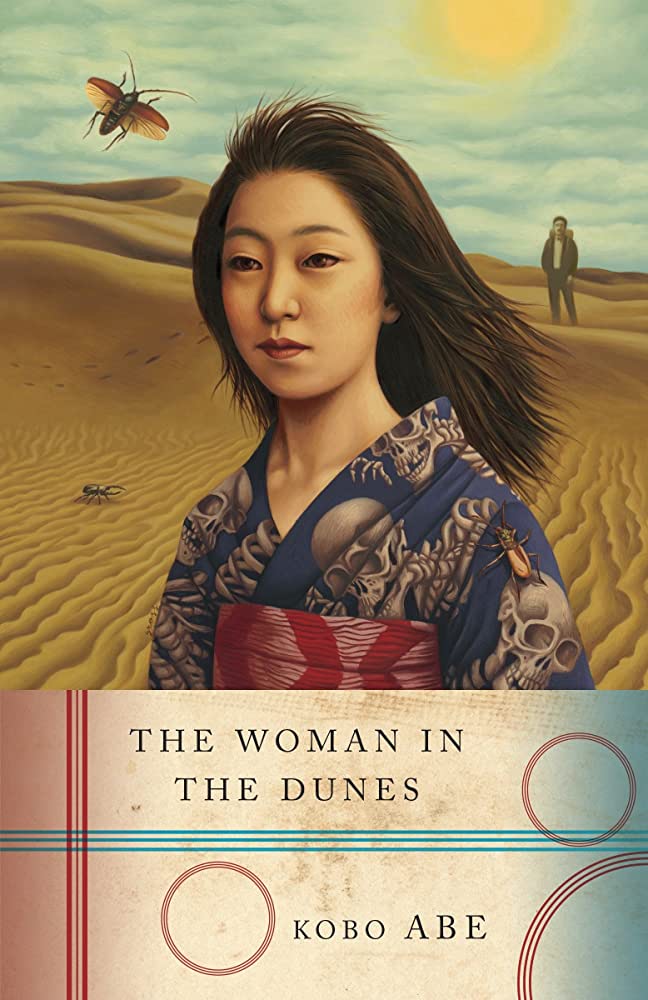
The Woman in the Dunes
Let me start with what I loved about this book (a book that, before anything else is said, I enjoyed and found worthwhile and would recommend reading with some caveats). This book is fenced in on either sides by powerful writing (spoilers!):
- The introductory passages, and your introduction to this village of the dunes, a beautiful and terrifying place that like any great allegory feels like it could be a symbol for a thousand things at once. The measure of good genre writing is the ability for the allegory to stand on the weight of its own strength apart from symbolism, and there are few images in literature less arresting than the idea of a Sisyphean village populated by people who spend their days freeing their homes from the sand. 2. The two ending passages: the protagonist's rape of his captor, and his discovery of water and ultimate rejection of escape.
These bookends (a metaphor that always feels clumsy when you use it to describe a book) alone warrant a close examination and digestion of this book. Now I will quibble with the rest.
I often rave about the power of a novella as a form, and yet I found myself spending much of the book feeling bored: bored with the protagonist, bored with his cycle of hope and anger and defeat. This is a short book whose middle stretches felt arduous: you could charitably argue that this was by design, so as to evoke the endless sprawl and solitude of the dunes, but I found it tricky to square.
I am excited to read more of Abe's work (I just borrowed a copy of The Box Man). I am hoping his protagonists show more variation than this one, who existed mostly as a vehicle for the dunes.