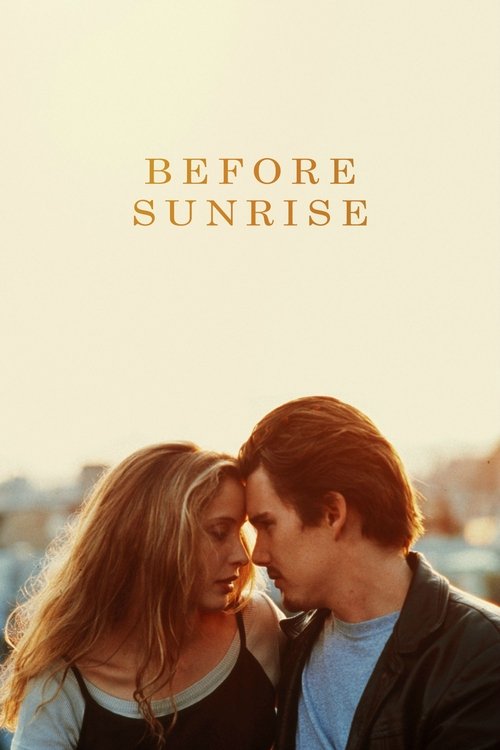
Before Sunrise
I watched Before Sunrise for the first time around a decade ago, and I appreciated it then for what it was on the surface: a straightforwardly terrific and beautiful love story that managed to avoid cliches of the form while still feeling correct and real. And yet fantastic all at once.
When I watched it then, I was a different person — one closer to Jesse's character in spirit and in fact. I was single, romantic, and a little bruised — and I found myself wishing I could spend a day strolling Viennese streets with the love of my life.
I watched this movie again, ten years later, with the love of my life — with whom I have not strolled the Viennese streets, but Parisian and Belgian and many, many other beautiful streets, just the same — and found myself reflecting on this film in another light.
Linklater, who directed this and many other films that I hold near and dear to my heart, was 34 when he made this movie. I find that to be a remarkable age, not just because this is such an incredible, wise, and mature film for a filmmaker at an age that is generally considered the domain of young pups and people still trying to figure things out in the industry, but because it threads the needle between there-ness and distance. Linklater and the talented team around this film were young enough to remember this is exactly how people are in their 20s: headstrong and foolish, but not silly, and not trivial.
When watching this film a second time, you can see a little bit more clearly the things that Linklater wants you to see: Jesse and Celine are flawed. Celine has a caginess to her, a real sense of editorial remove. Jesse is a bit of a prick in ways both explained by the film and inherent to his character. This is not to detract from the love story, but to affirm it. These are not two paragons of virtue: they are real people acting the way real people do. You can imagine a different filmmaker, perhaps even an older version of Linklater, rigging these parts with a little bit more cynicism — a little bit more jaggedness to the friction.
But I dither. Even as I'm tempted to metatextualize what is one of my favorite films of all time, the film's ability to transcend doesn't really come from writing. The three most indelible scenes (the listening booth, the fake phone calls, and the ending montage) are, for the large part, silent, and their perfection is not in anything but the sheer humanity emanating from these two terrific performances. You are transported into these two people simultaneously. I am sure we will never know — but, at risk of parasociety, it is impossible not to end this movie and be convinced that these two people, both the characters and the actors portraying them, are deeply in love.
And that that love is a real one, not a storybook one, which is to say, it may never come to pass.