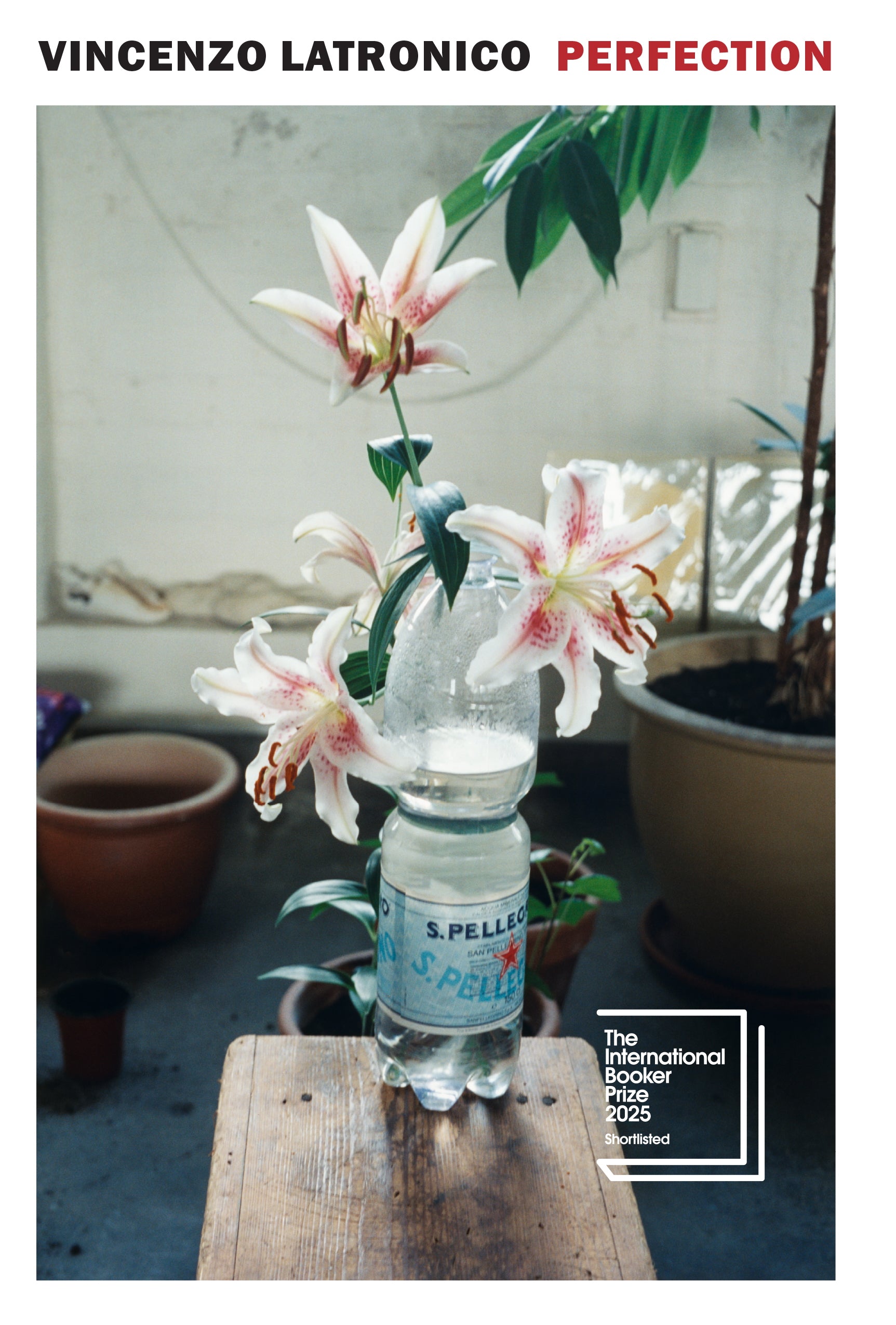
Perfection
They did for money now what they used to do out of passion. This was a fact. From this fact they concluded that they had turned their passion into a job. This was a deduction.
They would imagine how they must look to the outside world with their aching cheekbones drawn into fixed grins, their clothes smeared with cigarette ash and sweat, and still carrying the odd trace of dimly remembered adventures: a marker pen scribble on their face; a garland of fake frangipani in their pocket; a bunch of helium balloons tied to their jacket buttons and now trailing, half-deflated, like comet tails. They would feel decadent and enviable, alive.
All the creature comforts in the world can't keep it from being depressing. You find yourself taking ketamine in your late 30s and half-heartedly trying to get a bouncer to let you into a party. Whether you find this revelation and many others like it the told to you in biting mockery or bruising self-flagellation depends on how much winking autofiction you decide to glean from Vincenzo Latronico's Perfection.
This is a book, a couple named Tom and Anna, who by all accounts are the picture of happiness. They have an email job. They live in Berlin of their own volition. They are very aesthetic and get to lead the lives they always thought they'd want, filled with tasteful furniture and art gallery openings, hanging out with the cool kids. Tom and Anna moved to Berlin from Italy and appear to have no real discernible personality or distinction from one another, a fact that would have made this a fairly boring book save for the fact that I learned that its author had moved and lived in Berlin. We are meant to hate Tom and Anna, but also to pity them. I find it easy to do the latter and harder to do the former, mostly because, despite the author's entreaties otherwise, I cannot condemn anyone for falling prey to consumerism and to surface-level materialism that forever encroaches on society, or so it feels.
The book's main action, such as it is, is a dawning realization for Tom and Anna that despite their titular perfect lives, they find themselves increasingly unhappy and adrift with work, with meaning, with their place in Berlin, with their place in the world. This is perhaps the mode of life that I am in, but to me, the message of the book is clear. Tom and Anna have rejected their family, both as their parents and their theoretical children, and are suffering a crisis of faith as a result. But there's a certain Wormwood's Letter didacticism to the prose and message that would be unbearable if the novel were any longer than its 137 pages.
Vincenzo is a very talented writer and a keen observer of all the accoutrement that a well-informed and well-to-do elder millennial would consider correct. I found myself thinking of Patricia Lockhart's No One Is Talking About This, which did a similarly impressive job of writing about online without fully succumbing to it. But Lockhart's book turned when its protagonist realized in its second half what the real world had in apposition to that of the Digitus. Here we get no such antidote, and the book ends less with a note of rejection of consumerism and more on a scathe, that of Tom and Anna through luck but not will ascending the rungs from Lucky Labor to capital.
I led this essay by saying your view of its message is defined by how much you think this is the author attacking himself versus attacking his erstwhile companions in the faux-literate Berlin scene. Maybe it's just projection and the huge Perec epitaph from Things, a book that this is apparently much modeled after. But I can't help thinking that Vincenzo is attacking the things which he's transcended more than he's commenting on his transcendence, and that forces me to view the work in a dimmer light. His reviews of Tom and Anna give off the uncharitable and mean-spirited stench of a quote tweet. They have bad sex, they bicker, they form no opinions for themselves. They can't even really help during a migrant crisis.
All which I say many such cases I cannot bring myself to despise someone who I would probably identify with in spirit but in solidarity. I would probably be doing the digital nomad thing if I weren't lucky enough to have Hayley and then Lucy roll themselves into my life. It feels hardly virtuous to begrudge someone whose greatest sin was to not be as lucky as I was.